How we check every website before it goes live
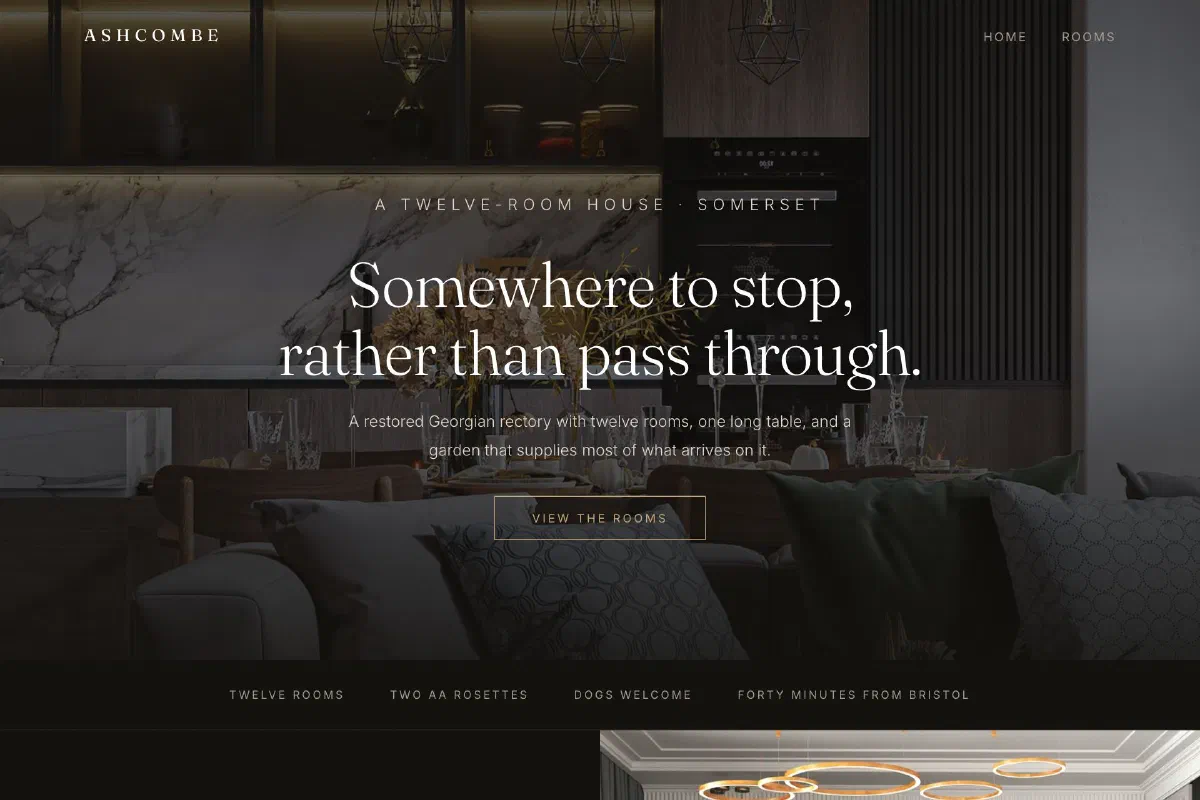
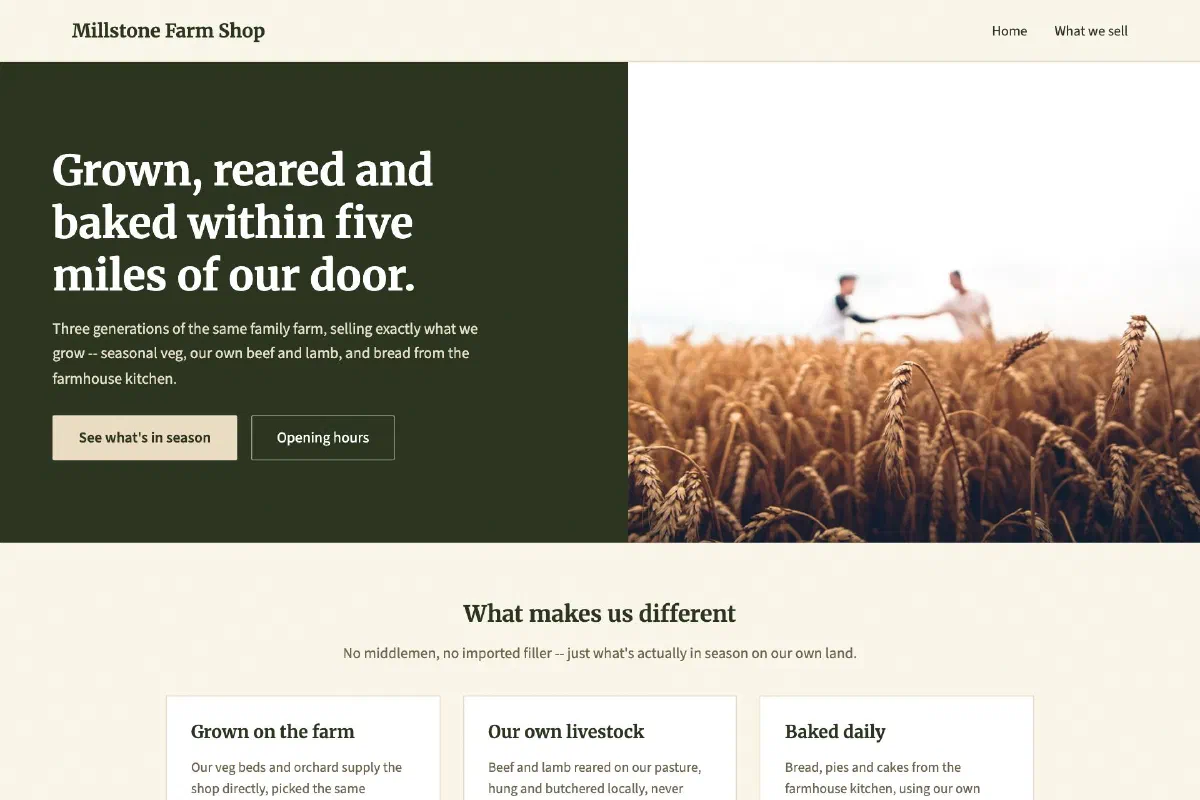
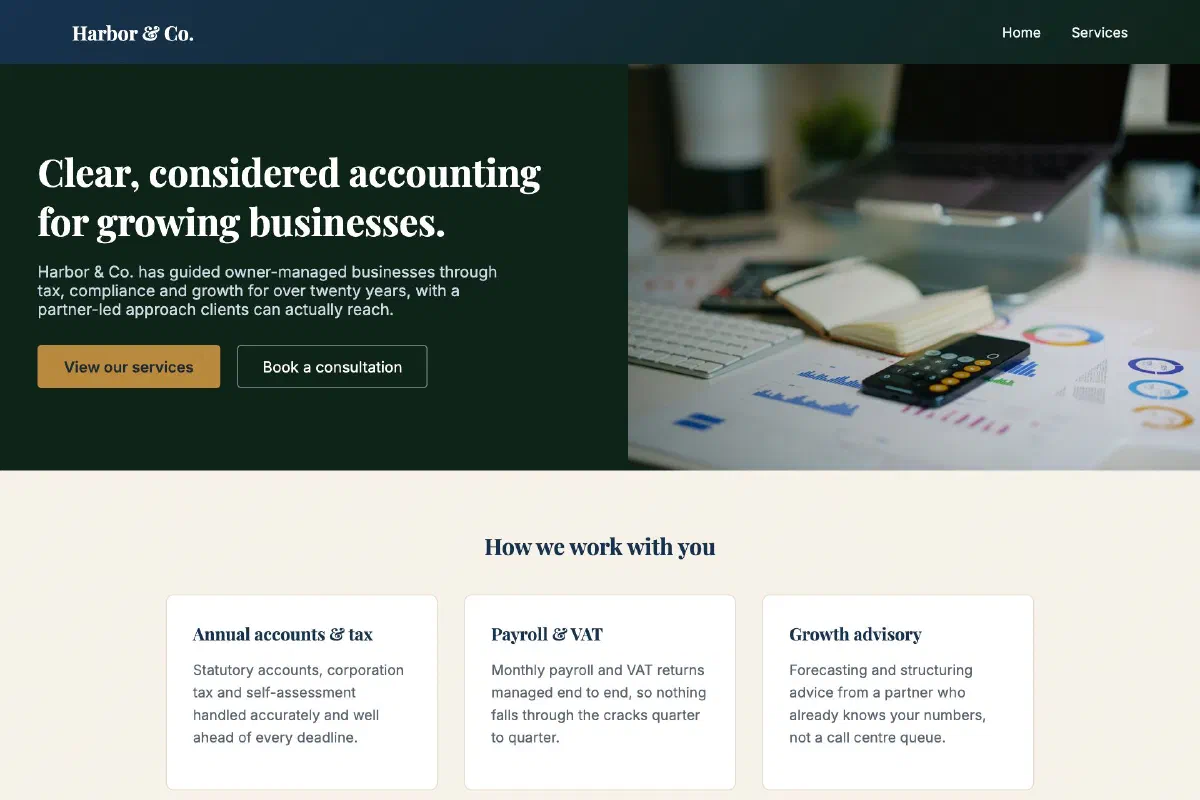
Every £47 a month managed website we build is designed for that business, then checked on phone and laptop sizes for readability, tap targets, broken images and search basics. A person then reviews the whole site before your domain is pointed at it.
The six steps from your brief to a live website
Each step does a different job. Here’s what happens, in order.
- 01
Finding out about the business
We agree the pages, goals, tone, customers, services and the look before design starts.
- 02
Choosing the design
Type, layout and colours are picked for this business, not copied from a house template.
- 03
Building each page
Each page follows the same design while doing its own job, such as getting a call or answering a question.
- 04
Automatic checks
Every page is measured at phone and laptop sizes for contrast, tap targets, text running off the screen, broken images and structural faults.
- 05
Fixing what the checks find
Faults are fixed one by one. Design feedback is acted on without throwing away a page that’s otherwise good.
- 06
A person reviews it
Someone looks through the whole site as a customer would before your domain is pointed at it.
What every website must pass
Works properly on a phone
Phone layouts are planned, with a menu that works and the important things near the top. A desktop page squashed into a column doesn’t pass.
Easy to read and use
Contrast, text size, keyboard use and tap targets are measured, so a stylish choice can’t make the site hard to use.
Quick to load
Static pages, sensibly sized images and no page builder slowing things down keep the route from visit to enquiry short.
Google basics in place
Headings, page titles, descriptions, canonical addresses, structured data, robots rules and sitemaps on every site.
Safe code only
The page code goes through checks and approved lists before it can be published.
A person signs it off
Automatic checks catch faults that can be measured. A person judges whether the site is clear, believable and right for the business.
What makes a good small business website?
A good small business website does a few plain things well. It says what you do and where in the first few seconds. It works on a phone, because that’s where a lot of your customers will look you up. It loads quickly, it’s easy to read, and it makes it obvious how to get in touch. Every £47 a month managed website we build is checked against that list before it goes live.
Why we don’t use templates
A solicitor in Shrewsbury and a florist in Welshpool need very different websites. So we pick the type, layout, colours and photos for each business. We’re strict about the things that can be measured, like contrast and tap targets, and leave the design free to suit the business. That’s how sites end up looking different without being hard to use.
How we check a website on phones and laptops
Every page is opened at phone and laptop sizes and measured automatically. The checks look for text that’s too faint to read, buttons too small to tap, content running off the edge of the screen, broken images and faults in the page structure. Anything that fails is fixed before you see the draft.
Is the website accessible?
We measure contrast, text size, keyboard use and tap targets on every page, so the site works for more people, including those using a keyboard instead of a mouse. Try our free colour contrast checker on your current site.
Is the website set up for Google?
Yes. Every site gets proper headings, page titles, descriptions, canonical addresses, structured data, robots rules and a sitemap, all produced by the same tested code. It won’t guarantee a ranking, but it means Google can read the site properly from day one. You can see how a page might look in results with our Google search preview tool.
Why is the site fast?
Your website is built as plain HTML pages ahead of time, with sensibly sized images and no page builder running in the background. There’s no database to slow each visit down. Fast pages mean fewer people give up before they call. Our website health page explains more.
Does a person check it?
Always. Automatic checks are good at catching faults you can measure. They can’t tell whether a page sounds right for a family butcher or a firm of accountants. A person reviews the whole site before your domain is pointed at it, and you see a private preview before anything goes live. Read more about the design and writing or how it works.
The next useful question.
Who it's for
The small businesses our £47 a month website suits, and the projects that need something else.
Read more → Website costsWebsite costs explained
What a small business website really costs once you add hosting, the domain, changes and backups.
Read more → Website health checkWebsite health checklist
Eight checks you can run on your current website, and what to do if it fails some.
Read more →Questions about how we check websites
Is my website a template?
No. The type, layout, colours and photos are chosen for your business. The checks are the same for everyone, the design isn’t.
Will my website work on a phone?
Yes. Every page is checked at phone and laptop sizes, including the menu, text size and how easy the buttons are to tap.
Is the website accessible?
We measure contrast, text size, keyboard use and tap targets on every page and fix anything that fails before launch.
Is it set up for Google?
Yes. Headings, page titles, descriptions, structured data, robots rules and a sitemap come as standard.
Does a real person check the site?
Yes. A person reviews the whole site before your domain is pointed at it, and you see a private preview first.
What if I don't like something in the draft?
Tell us and we change it, as many times as it takes before launch. Those changes don’t count against your 10 a month.
Get a website that's been checked properly
Tell us about the business, check the proposed pages and domain, then decide. Your first monthly payment starts the design and writing.
No setup fee · No contract · Cancel any time